
Joint Repairs
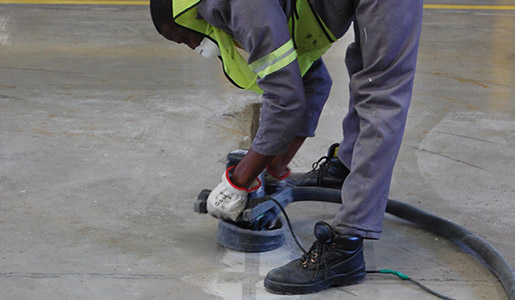
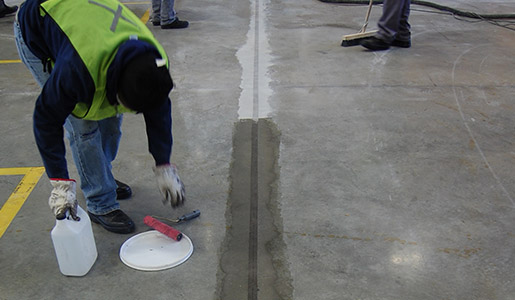
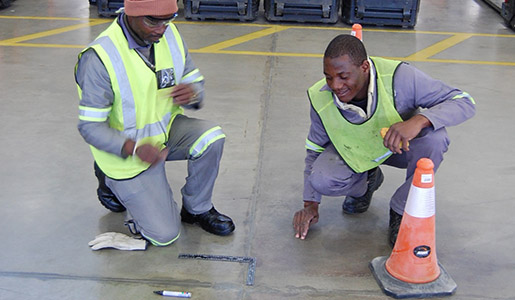
Restoring Strength Where It Matters Most
Most concrete experts agree that the most common area where concrete floors become damaged, is the joints. In fact, it is joints that present as the most perplexing problem to floor owners and experts in the industry.
Given the fact that most joints are spaced between 3,5m to 6m apart, this translates into a floor of 10 000m2, having around 3500m to 4000m of joints! That translates into up to 4000m of potential floor damages, time wastage and equipment damages!
In the same way that financials are considered as a way of asset management, business needs to look at the floor of their facility as being an asset that needs to be managed.
By focussing on your investment money working for you, you should also focus on your investment in assets working for you!
The Challenge
There are many things that can happen to joints progressively over time, and include the following:
- Spalling of joint edges due to hard wheeled traffic – since most modern material handling vehicles (MHV’s) use solid poly-urethane wheels
- Joints widen as the concrete shrinks over time
- Concrete edges may curl with time due to variables slab drying shrinkage, thus exposing the joints to damage
- Snapping of Slabs – due to the curling, this can lead to large cracks forming at the panel corners, and ultimately “snapping”
The fact remains that the concrete floor is the most important element of a working facility, for it is the fundamental platform of all operational functions.
The service-ability of a floor has a direct impact on your organisations productivity – and the cost implications of a deteriorated and un-serviceable floor are significant.
A damaged floor can result in the following costly productive problems:
- Vibratory damage to MHV parts, bearings and on-board computers (Reported cases of facilities spending in excess of R300 000.00 per month on simply MHV maintenance and repairs due to floors)
- Accelerated MHV wheel wear and replacement
- Downtime due to MHV not operational
- Operator slow down due to defects and operator fatigue
- Absenteeism due to chronic neuro-muscular injuries for operators
- Time wastage due to needing to slow down around damaged floor areas
- Increased house-keeping costs
- Increase staff costs for MHV repair teams
- Excess MHV’s due to down time of damaged MHV’s
- Load tippage and breakage caused by defects
- Deprecation of the value of your floor as an asset
In essence a damaged floor, not properly maintained…..impacts the bottom line financially!
The Way Forward
First and foremost, one needs to understand what the current status is of your floor. Basically the condition needs to be measured, before the correct management and maintenance program can be implemented.
Secondly, work with the right flooring contractor, for as the common saying goes…..”you get what you pay for”!
In taking the steps towards managing your floor asset more beneficially, use the following basic steps to start with:
Regular Inspections
Inspections, combined with regular cleaning allows for early identification of potential problem areas within the floor. These can and should be attended to promptly to avoid long term and more costly damage.
Joint Maintenance
Joint maintenance includes the use of the appropriate joint sealant product to top up joints. Additionally, the correct repair mortars for joint re-building and low pressure injection grouting need to be used and made standard across the business’s facilities. These will assist with the management of issues concerned with rocking panels.
Wheel Damage
Joint damage causes wheel damage, which in turn impacts negatively on operations
- Operator fatigue and absenteeism
- MHV repairs and down-time
- Reduced productivity
Cracks
Attend to cracks in the floor, as if left along and in combination with joint failures, these will add to the costs associated with floors.
Surface Damage
Surface damage can include holes, pitting, scaling and delamination. Whilst these can occur away from the joints, it is not uncommon to notice the development of larger holes and surface cavities beginning from the joints.
Why joints and flooring matters
A damaged floor can lead to high maintenance costs on material handling vehicles, damaged sensors, health and safety issues, load tippage and damage of the asset.
To eradicate this hidden gremlin from your warehouse you need to invest in your floor which will see a dramatic reduction in your maintenance costs and improved efficiency of operations.
Keep your floors performing at their best.
From joint repairs and crack remediation to full floor rehabilitation, we deliver targeted repair solutions that minimise disruption and extend the life of your concrete floor.
Other Concrete Floor Repair Services from CLF
Crack Repairs
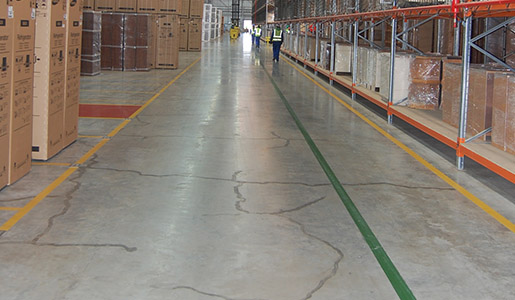
Cracks in your concrete floor can be either “cosmetic” or “structural” with regards to their impact on your floor and business.
Injection Grouting
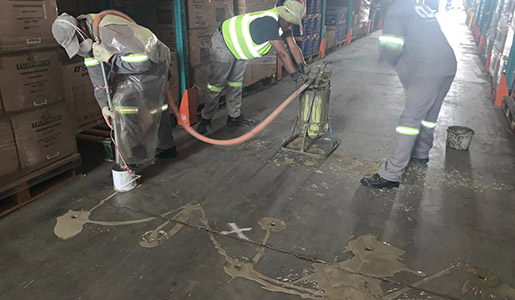
This method involves injecting a non-shrink grout below the panels to fill in the voids is an accepted repair method.
Freezer Repairs
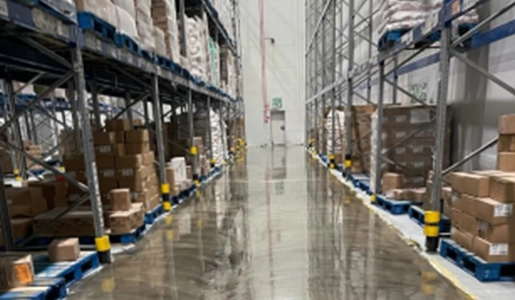
Freezer facilities require highly specialised repair methodologies and products due to the sub-zero operational temperatures.
Delamination Repairs
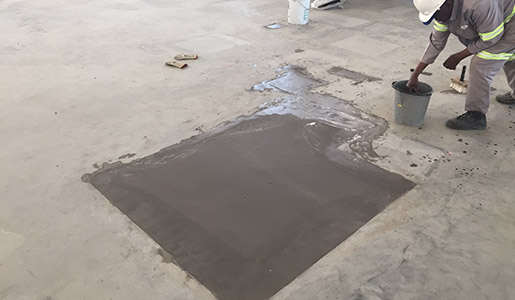
Floors exhibiting surface issues such as weak abrasion resistance or surface delamination can be easily repaired using CLF’s refined repair techniques.
Bolt Repairs
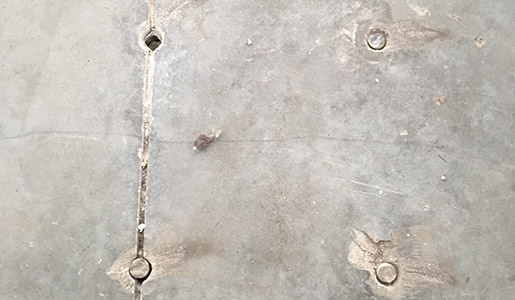
Floor users are continually revising operational layouts and strategies which often lead to the moving of racking and fencing.
Level Repairs
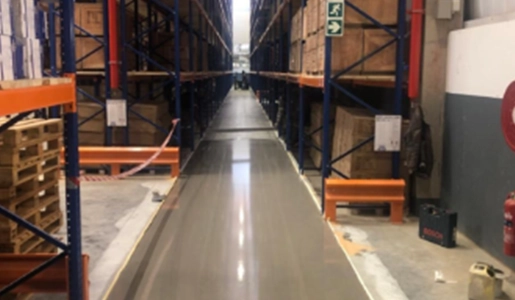
CLF has incorporated methodologies using specialist grinding and appropriate screeds to improve floor levels as required.