
The Unseen Risks of Concrete Floors
Practical insights into concrete floor performance, lifecycle risks and repairs.
Concrete floors quietly support the weight of entire operations – forklifts moving, pallets stacking, production running day after day. On the surface, they appear simple. Solid. Done.
But beneath that simplicity, something else is happening. Movement, load, and repetition begin to change how the floor behaves – slowly at first, then all at once, showing up as vibration, wear, inefficiency, maintenance, and cost.
By the time the problem is visible, it’s already affecting operations.
These Insights explore what is often missed – where risk begins, how it develops, and why it matters more than most people realise. Once you start seeing it, you don’t look at floors the same way again.

- Sven Schütte
Why Freezer Floors Fail Differently
The hidden interaction between temperature, moisture, traffic and operational uptime

- Sven Schütte
The Hidden Cost of Doing Nothing
Concrete floor problems are often treated as maintenance issues until they begin interrupting operations.
This Insight explores the hidden cost of delaying intervention, how floor deterioration gradually affects business performance, and why the real risk is often not only the repair itself — but what happens when the floor starts influencing movement, access, safety, productivity and operational continuity.

- Sven Schütte
Flatness vs Levelness – The Productivity Lever Nobody Specified
Flatness and levelness are often specified in concrete floors, but rarely fully understood. This Insight explores how misunderstanding surface regularity leads to hidden productivity losses, increased equipment wear, and long-term operational inefficiencies in logistics and industrial environments.

- Sven Schütte
Why the Floor Is the Most Important Asset in a Logistics Building
Concrete floors in logistics facilities are often treated as simple construction elements, yet they function as critical operational assets. This Insight explores how underestimating the role of the floor introduces long-term performance risk, impacts productivity, and increases operational costs.
- Sven Schütte
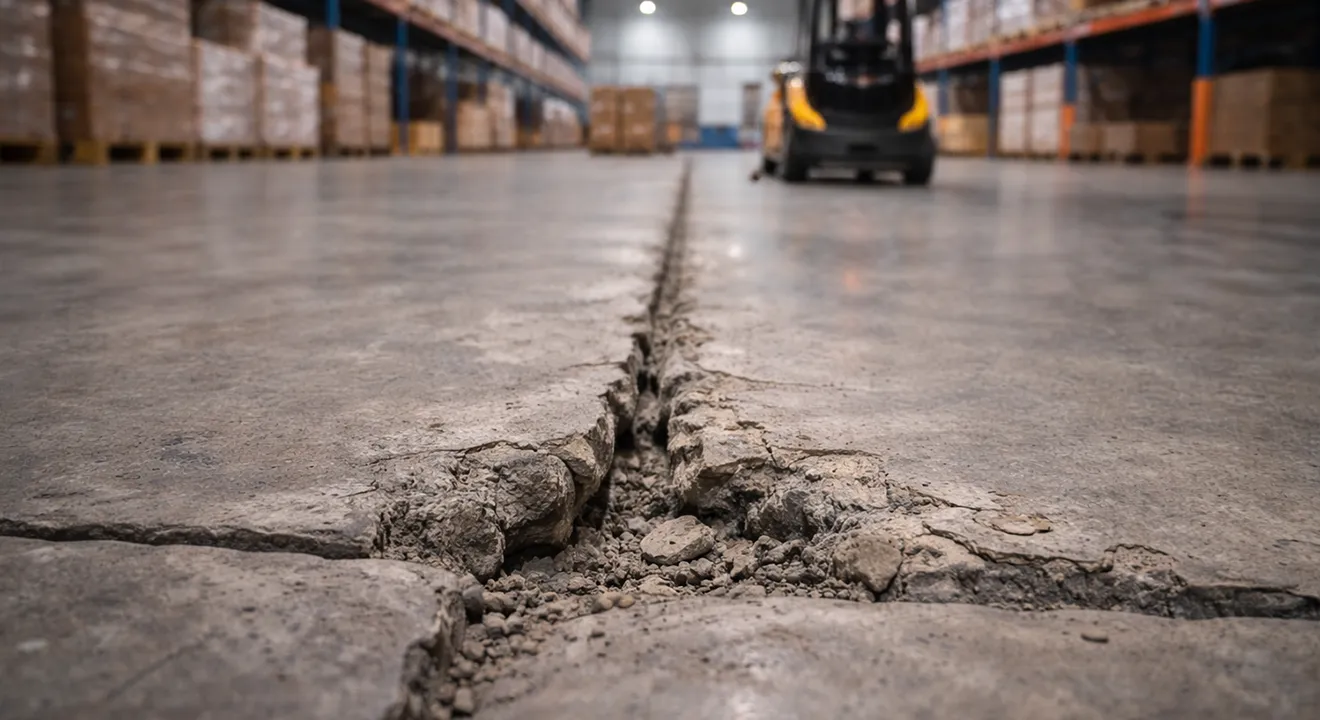
The Joint Problem – Where Warehouse Floors Start Failing
Concrete floor failures in warehouses often begin at the joints. This Insight explores why joints are the most vulnerable part of the floor system, how deterioration develops over time, and the operational and cost implications of delayed intervention.