
Introduction
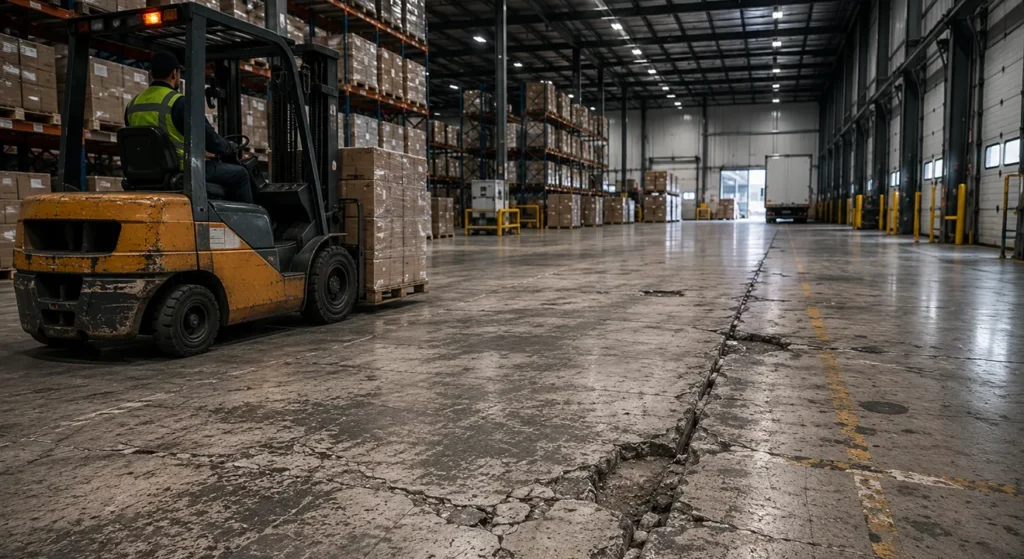
Most floor problems do not start as emergencies.
They start as small defects.
A rough joint.
A cracked panel.
A worn traffic lane.
A damaged loading area.
A section of hardstand that no longer carries movement properly.
At first, the operation adapts.
Forklift drivers slow down. Maintenance teams patch the same area again. Trucks avoid a damaged section. Operators learn which parts of the floor to avoid.
For a while, the business keeps moving.
And that is often where the real risk begins.
Because when the floor still appears usable, doing nothing feels easier than intervention.
The defect is visible.
But the consequence is not yet urgent.
So the issue is postponed.
Not because nobody sees it.
But because operations are still managing to work around it.
The Floor Is Only Ignored Until It Starts Affecting the Business
Concrete floors sit beneath the operation.
They are crossed every day, loaded every day, washed every day, impacted every day and relied on every day.
Because they are always there, they are often treated as background infrastructure rather than operational assets.
That changes once the floor stops performing properly.
A failed joint is no longer just a joint when forklifts can no longer cross it efficiently.
A rough traffic aisle is no longer just a surface issue when wheels, bearings and equipment maintenance costs begin increasing.
A damaged freezer floor is no longer just a floor problem when repairs require shutdown planning and access restrictions.
A failed hardstand is no longer just external concrete when trucks cannot enter or exit the facility properly.
The floor becomes visible when it starts controlling what the business can and cannot do.
The Cost Is Not Only the Repair
When concrete floor deterioration is ignored, the repair cost is usually only one part of the problem.
The larger cost often sits around the repair itself:
- interrupted operations
- reduced movement efficiency
- blocked access routes
- temporary workarounds
- equipment downtime
- production delays
- safety controls
- cleaning inefficiencies
- loss of usable space
- unplanned maintenance pressure
This is where delayed intervention becomes expensive.
Not because the defect suddenly appeared.
But because it was allowed to remain part of the operation for too long.
The longer a floor problem is normalised, the more it moves from a maintenance item into an operational cost.
The Risk Is Not Only Commercial
There is another layer that is often underestimated.
When damaged or deteriorating floors begin affecting movement, control, access, visibility or stability, the issue can also become a Health & Safety concern.
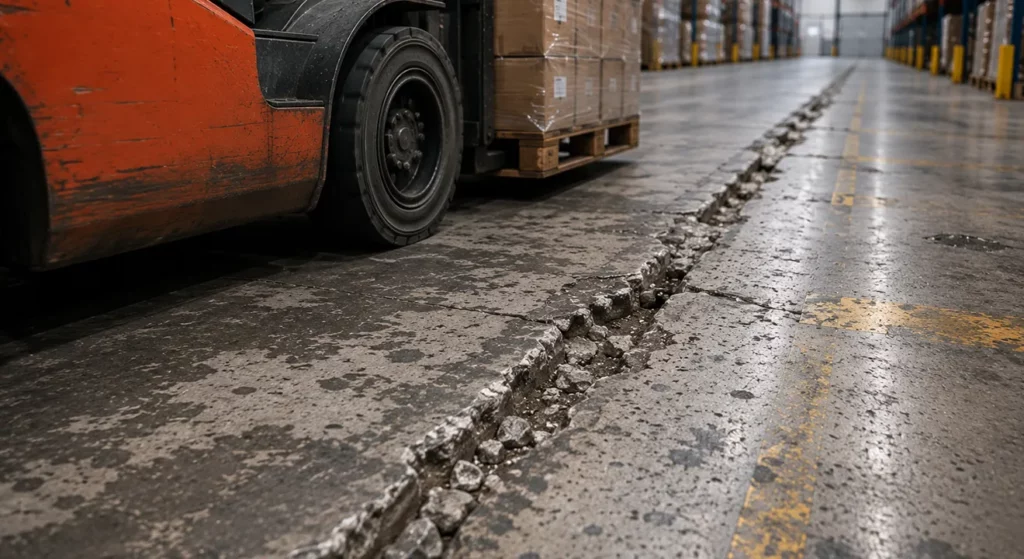
A rough crossing may affect forklift control.
An uneven surface may create a trip hazard.
A poor walkway may expose pedestrians to unnecessary risk.
A worker pushing a pallet jack over a rough section may need to exert more force.
A dusting concrete surface may affect housekeeping and airborne exposure.
A damaged evacuation route may slow safe movement when clear access matters most.
These issues do not always appear dramatic at first.
But once floor condition starts affecting people, movement or safe access, the conversation changes.
The floor is no longer only a maintenance concern.
It becomes part of the operational risk profile of the facility.
This is not the full Health & Safety conversation. That deserves its own focus.
But it is an important reminder: doing nothing does not only carry cost risk. In some environments, it may also carry safety and liability risk.
Where This Risk Shows Up
The cost of doing nothing is not limited to one type of facility.
It appears differently across sectors, but the pattern is similar: the floor is ignored until it starts interfering with the operation.
1. Warehousing and Logistics
In warehouses, the risk often starts with joints, traffic lanes, racking aisles, loading areas and dispatch zones.
Forklifts follow the same routes every day. They cross the same joints, turn in the same areas and repeat the same movements thousands of times over the life of the facility.
When those areas deteriorate, movement becomes slower. Vibration increases. Equipment wear accelerates. Drivers adapt. Maintenance teams patch. Operations continue — but not as efficiently as before.
The floor has not stopped the business yet.
But it has already started influencing it.
2. Cold Storage and Freezer Facilities
In cold storage environments, the risk is more sensitive because access is difficult and downtime is expensive.
A damaged freezer floor cannot always be repaired easily during normal operations. Temperature control, hygiene requirements, traffic movement, access planning and operational continuity all become part of the problem.
The issue is not only the repair.
It is when, how and under what conditions the repair can actually be done.
3. Manufacturing and Production Facilities
In manufacturing, the floor is part of the production platform.
It supports machinery, production lines, material movement, equipment bases and internal logistics.
If the floor begins to move, crack, wear or create vibration, the impact can extend into production performance.
The problem may first appear as equipment vibration, alignment issues, recurring maintenance or reduced process stability.
But the root cause may sit beneath the operation.
In these environments, floor problems do not always look like floor problems at first.
They can show up as production problems.
4. Mining and Heavy Industrial Environments
In mining and heavy industrial environments, concrete is exposed to harsher conditions: heavy loads, abrasion, impact, contamination, water, slurry and constant maintenance activity.
A failed area in a workshop, service bay, plant zone or access route can quickly become more than a surface issue.
It can affect maintenance turnaround, safe access, housekeeping, equipment movement and operational uptime.
In these environments, damaged concrete is often tolerated because the environment is already considered rough.
That is exactly why the risk can remain unnoticed for too long.
5. Infrastructure, Yards and Hardstands
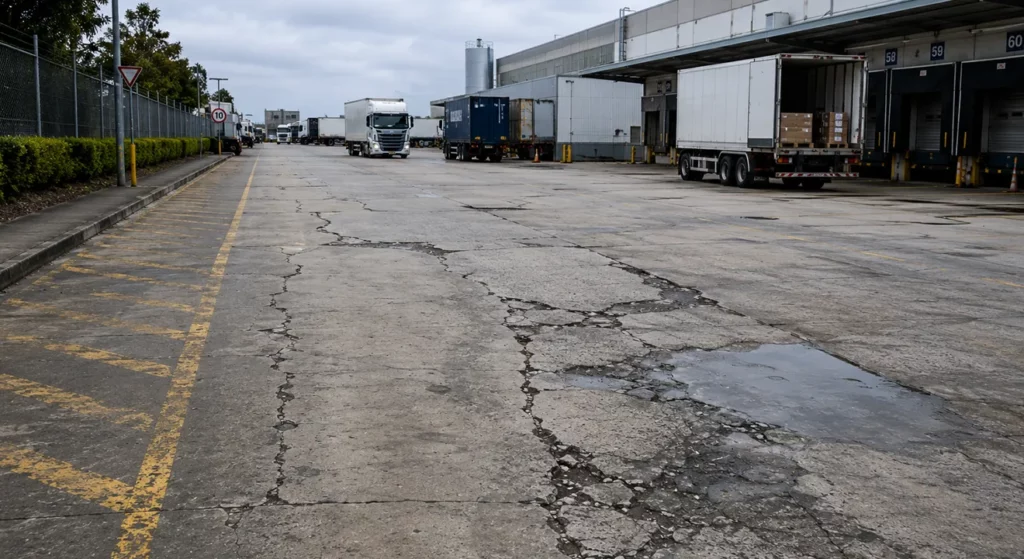
External concrete areas are often underestimated until they affect access.
A failed hardstand, loading yard, gate entrance, truck route or turning area can interrupt the movement of vehicles before they even enter the building.
This is where the floor problem becomes a logistics problem.
If trucks cannot move properly, loading cannot happen properly. If access is restricted, the operation feels it immediately.
Sometimes the most critical floor is the one at the gate.
And It Does Not Stop There
The same principle applies to agro-processing facilities, marine and coastal operations, retail spaces, data centres, energy facilities and other environments where concrete supports movement, access, safety, hygiene, equipment or uptime.
Different sectors experience the risk differently.
But the underlying issue is the same.
The floor is only ignored until it starts deciding what the operation can and cannot do.
Adaptation Is a Warning Sign
One of the clearest signs of floor-related operational risk is adaptation.
When people begin changing the way they work around the floor, the floor is already influencing performance.
Examples include:
- forklift operators slowing down in certain areas
- routes being changed to avoid rough sections
- temporary steel plates or recurring patch repairs
- cleaning teams spending more time in the same problem areas
- maintenance teams accepting repeated equipment wear
- production teams planning around floor defects
- pedestrian routes becoming unclear or compromised
- management delaying repairs because disruption feels inconvenient
Adaptation often feels practical.
But it is also evidence that the floor has already entered the operating cost of the business.
In some facilities, these adaptations become normal.
That is where the risk becomes harder to see.
Because the business no longer treats the floor problem as abnormal.
It simply learns to operate less efficiently around it.
The Moment the Floor Starts Controlling Operations
The most expensive moment is often not when the defect is first noticed.
It is when the floor dictates operational decisions.
That may happen when:
- a loading area can no longer be used
- an aisle needs to be closed
- a forklift is taken out of operation
- a freezer repair requires shutdown planning
- a production zone becomes unstable
- a hardstand failure restricts truck access
- a walkway or pedestrian route creates a safety concern
- a repair can no longer wait for a convenient time
At that point, the business is no longer managing the floor.
The floor is managing the business.
This is where the hidden cost of doing nothing becomes visible.
The issue is no longer only concrete condition.
It is lost operational freedom.
Why Early Inspection Matters
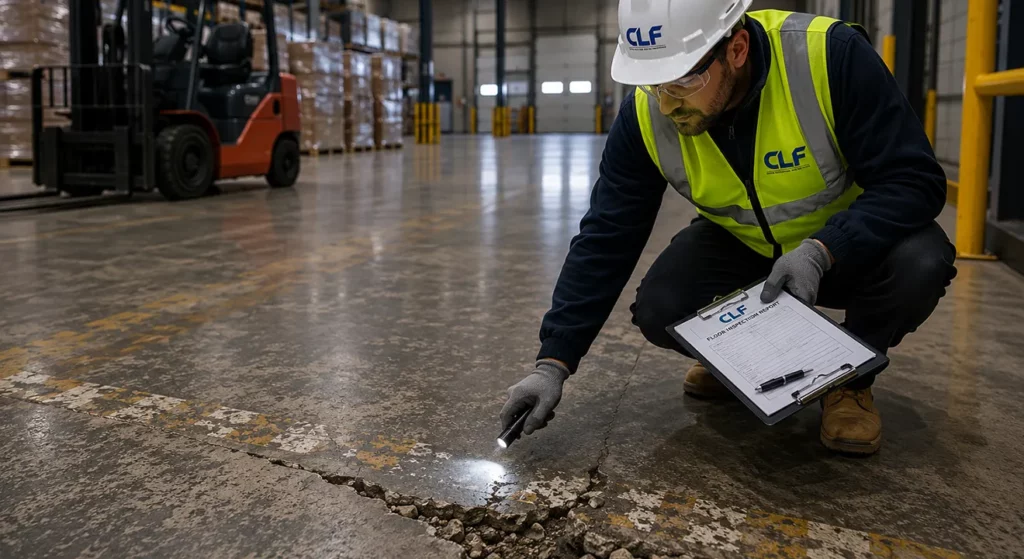
The purpose of inspection is not only to find defects.
It is to understand what the defects are revealing about how the floor is behaving under real operating conditions.
A crack may be a symptom.
A failed joint may be a warning.
A rough traffic lane may indicate repeated stress.
A damaged hardstand may point to movement, support, drainage or loading problems.
A slippery or dusting surface may point to wider performance and safety concerns.
The earlier these signs are understood, the more options the business usually has.
Planned intervention is very different from emergency repair.
It allows better timing, better access planning, better sequencing, lower operational disruption, more controlled cost and better safety planning.
A proper floor assessment helps shift the conversation away from reactive patching and toward risk understanding.
That is where better decisions start.
A Better Question
Instead of asking:
How long can we leave this?
A better question is:
What happens if this section of floor can no longer support the operation safely and efficiently?
That question changes the conversation.
It moves the floor from maintenance cost to operational risk.
It forces the business to think about access, uptime, safety, production, dispatch, equipment wear, pedestrian movement, continuity, operational resilience and liability exposure.
Because in many facilities, the cost of the floor problem is not measured when the defect is first seen.
It is measured when the operation has to stop, slow down, reroute, isolate, repair, investigate or recover.
Final Thought
The most dangerous floor problems are not always the biggest ones.
They are the ones sitting in the wrong place for too long.
A small defect in a quiet corner may remain a maintenance issue.
A small defect in a critical movement zone can become a business problem.
A small defect in a pedestrian route, loading zone, freezer floor, hardstand or production area can become something more serious.
That is the hidden cost of doing nothing.
The floor does not need to fail everywhere to affect operations.
It only needs to fail where movement, access, safety, production, dispatch or uptime depends on it.
And by the time business stops, the floor problem is no longer hidden.
It has already become operational.


